

Every enterprise wants to talk about AI capability, but fewer want to talk about what’s actually killing most of these initiatives before they get to production: data readiness.
Here’s a sobering statistic. Gartner predicts that through 2026, organizations will abandon 60% of AI projects unsupported by AI-ready data. “If the data has issues, then the data is not ready for AI,” said Roxane Edjlali, Senior Director Analyst.
It’s the real headline buried under most of the AI trend reports circulating this year, the ones leading with capability roadmaps and ROI frameworks while quietly citing data readiness as the number one blocker underneath it all. Enterprises keep buying tools built for AI-ready data, then discovering mid-project that their data was never ready to begin with.
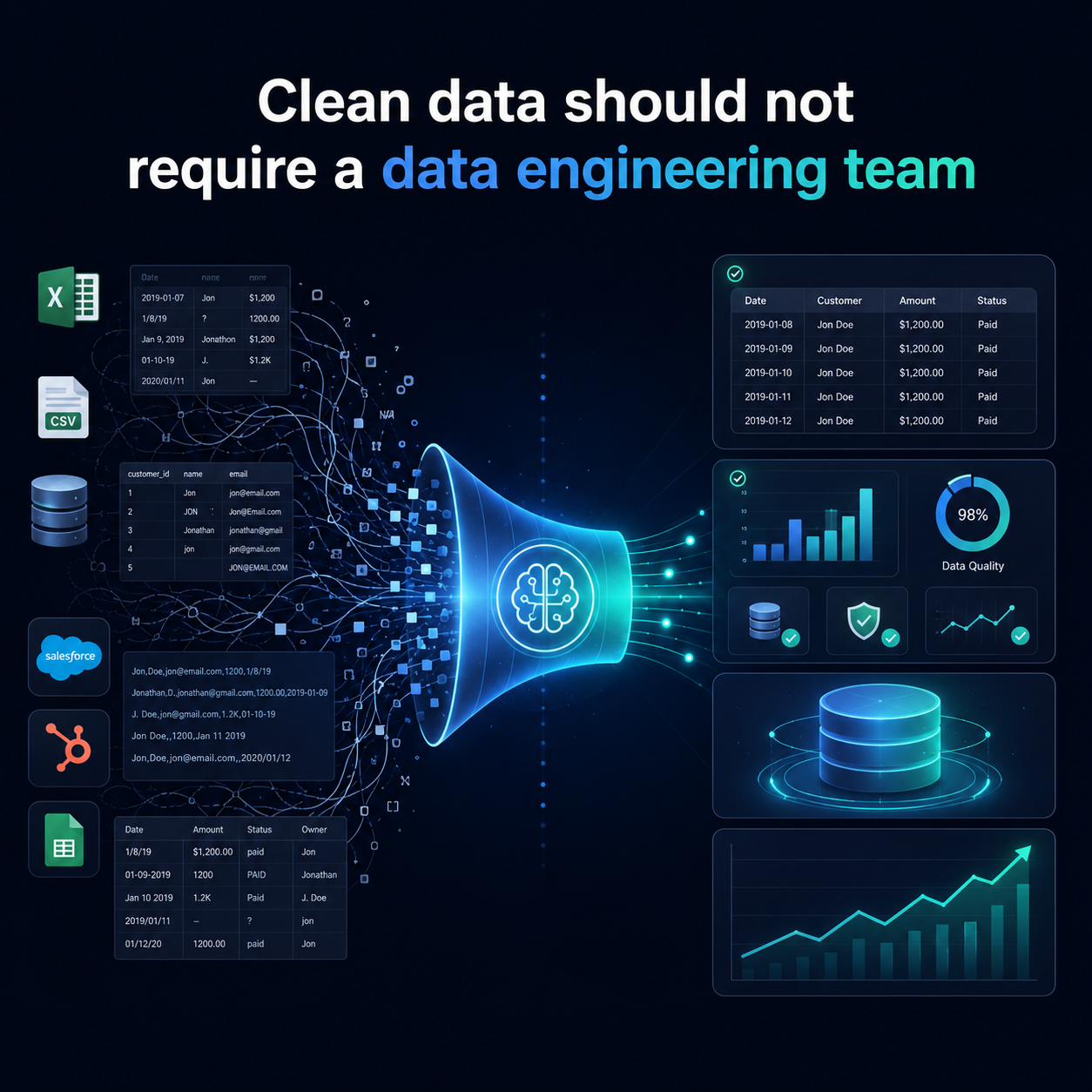
Data can be messy, and it typically shows up as a slow accumulation of friction. For example:
None of this means an organization lacks data. Most enterprises are drowning in it. What they lack is a system that gets that data into usable shape without a multi-month project, and without pulling a data engineering team off of everything else they’re supposed to be doing. The problem often isn’t the data quality itself, but the pipeline connecting raw data to something you can actually trust.
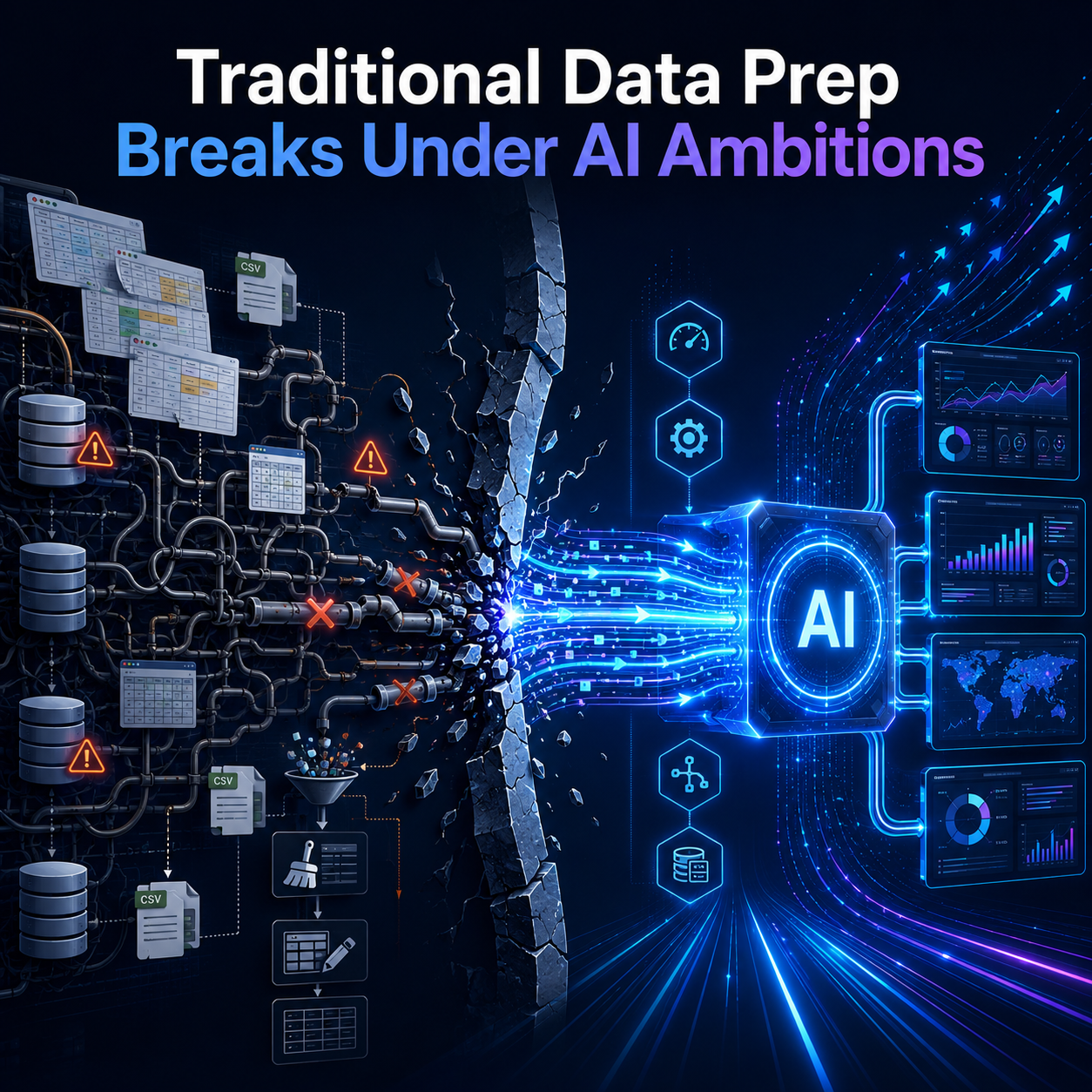
This blockage seems to be getting worse as AI initiatives scale. More data sources, more real-time expectations, more urgency from leadership to show results. The classic model where data engineers manually clean and stage data before anyone downstream touches it was never built for that pace.
The result is a bottleneck that shows up on both ends.
The analytics or AI team is often stuck waiting on IT to prep the next dataset. IT is buried under requests from every other team making the same demands. By the time data is finally clean enough to use, the initiative that needed it has often lost momentum, budget, or executive patience, which is a large part of why Gartner’s abandonment number is as high as it is.
The instinct here is usually to solve the problem with adding headcount. Hire more data engineers and build a bigger data team. But that treats the symptom. The fix is removing the dependency in the first place by building data readiness into the pipeline itself rather than treating it as a separate, engineering-gated step.
This is where the shape of the tooling matters as much as the intent behind it. At Intuitive Data Analytics (IDA), that approach starts at data intake, with preparation, cleaning, and management handled as a core phase of the platform rather than a preliminary project that has to be finished before the analytics work can begin.
A key part of this is what IDA calls its Intuitive Repair Process (IRP) for finding, fixing, and repairing rogue data as it’s added, instead of requiring a separate, periodic cleaning pass that always seems to fall behind. Data readiness becomes continuous rather than a one-time gate that data has to clear before anyone can use it.
Just as important is who gets to do this work. Because IDA’s data prep is no-code, it isn’t limited to whoever holds the data engineering keys. Business users can shape, clean, and prepare data as part of their normal workflow, which is precisely the gap between AI-ready and not ready.
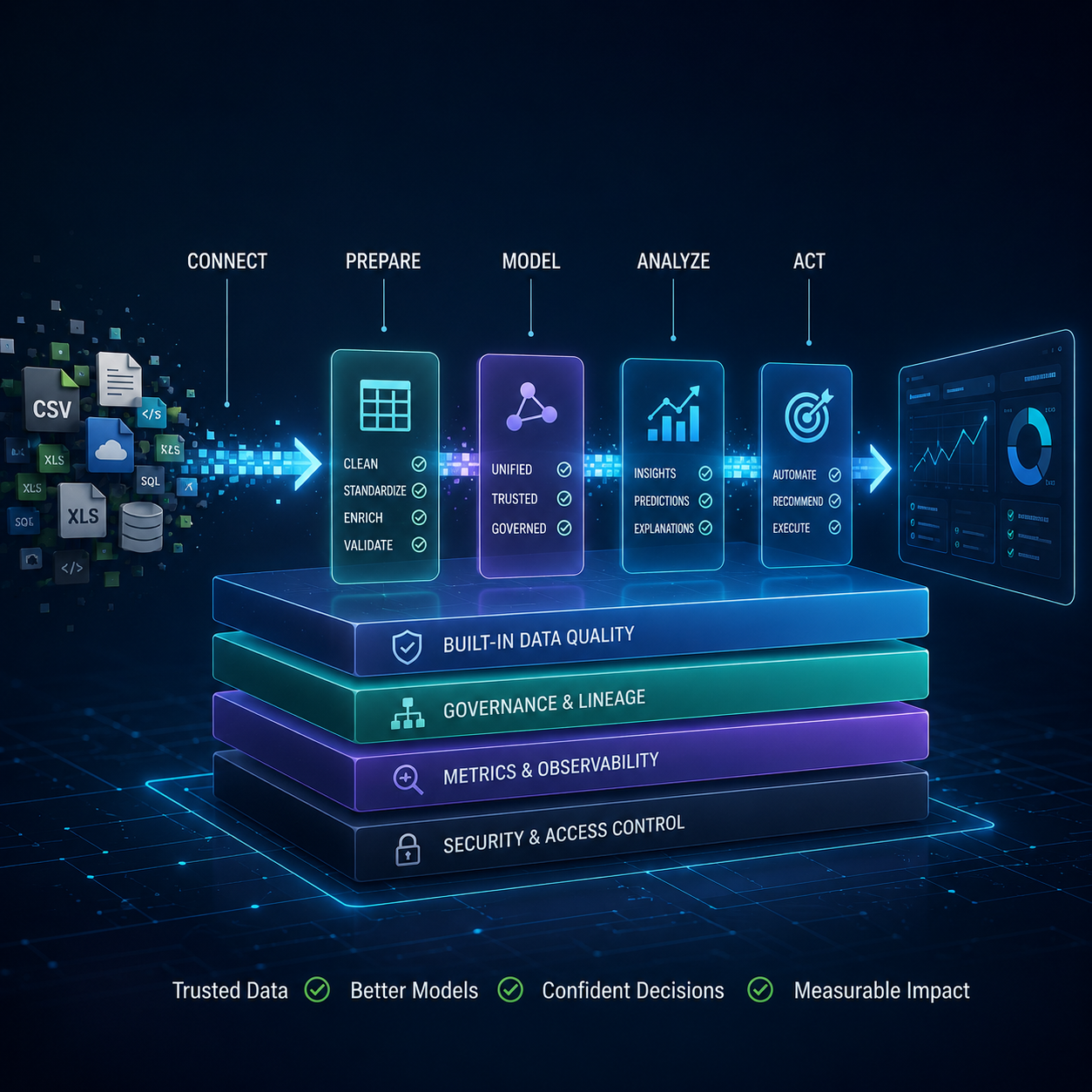
As you or IDA uncovers incomplete or rogue data, you can trigger the pattern-hunting algorithms to autofill or repair. With minimal effort, you can:
When readiness depends on a scarce, specialized team, it becomes the bottleneck. When it’s built into a platform anyone can use, it stops being a bottleneck at all. That’s also what collapses the traditional timeline where a data prep process that used to take months and a dedicated IT resource becomes something that can happen in days, without a queue.
Organizations that treat data readiness as infrastructure are the ones seeing speed-to-insight improve with clean data and without having to wait for long IT project queues. A couple of key questions to ask yourself:
AI initiatives don’t usually fail because the models were wrong. They fail because the data feeding them was never actually ready, and no one built a system designed to keep it that way. That’s the problem IDA’s platform is built to solve from the first phase as a built-in, no-code part of the pipeline, not a separate project standing between your team and the insight you need.
Request a demo and let the business intelligence experts at Intuitive Data Analytics show you the IDA difference.
